Established 1896
The Course
Eighteen holes of mature parkland golf in the leafy suburbs of Liverpool, kept in fine condition since 1896. Tree-lined fairways and well-guarded greens reward a straight drive and a thoughtful approach.
- Holes
- 18
- Par
- 71
- Yards
- 6,090
- Rating
- 70.0
- Slope
- 125
Character
Accuracy over power, every time.
The layout has had some recent changes, with new hole designs that add to the challenge and the fun without losing the course's established character. Even regulars will find something new.
At 6,090 yards it isn't a long course, and the card shows it: the average par 4 is just 358 yards. Tree-lined fairways and well-guarded greens make up for it, so a straight ball beats a long one.
- Par 3s
- 4
- Par 4s
- 11
- Par 5s
- 3
- Longest
- 549 yds
- the 10th
- Shortest
- 118 yds
- the 6th
- Stroke index 1
- the 11th
- 440 yds
Hole by hole, on the real ground
Walk all eighteen before you arrive.
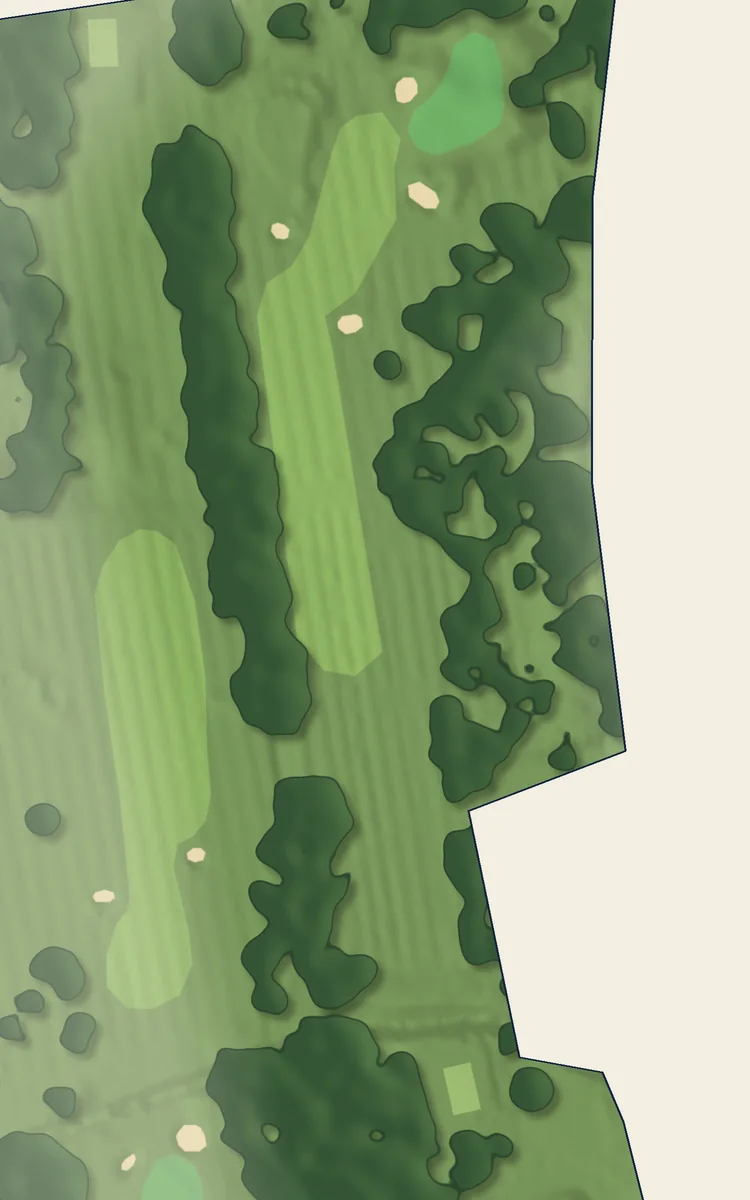
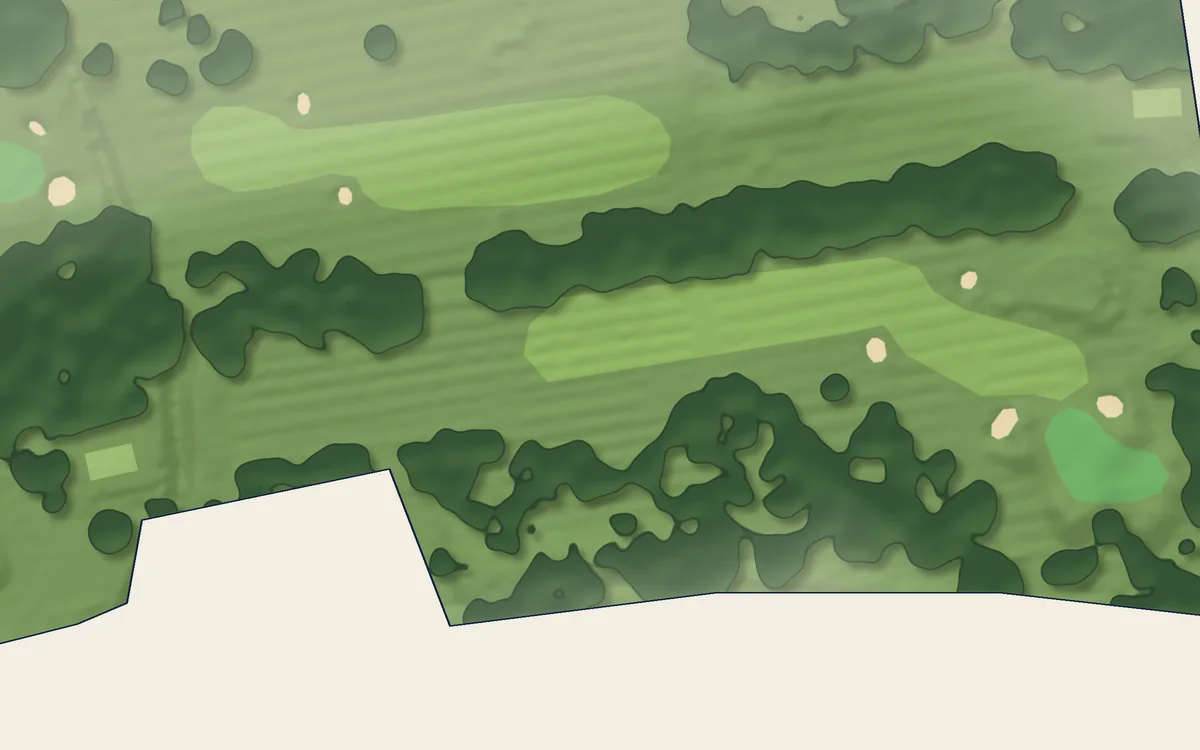
The model is built from the Environment Agency's laser survey of the course — a height reading every metre, trees and all. Pick a hole to see it whole, or fly it from the tee to the green. Switch between the three sets of tees and every yardage, par and stroke index updates with you. Every hole also has its own page.
The card
The full scorecard — and a Stableford calculator on top of it.
Put your handicap in and the card marks the holes where you get a shot. Enter your scores and it totals your points as you go.
Before you tee off
Local rules
As printed on the club’s local rules card. Each hole in the guide above also lists the rules that apply to it.
Out of bounds8
- 1.Beyond all fencing, railings and hedges which bound the course and both car parks.
- 2.7th hole on the left, as defined by white stakes.
- 3.Between the 9th and 7th holes, when playing the 9th hole only.
- 4.10th hole: the spinney on the left (in or over) between the tee and the end of the defining trench, indicated by the white stakes adjacent to the 150 yds marker.
- 5.17th hole: the spinney on the right (in or over) between the tee and the end of the defining trench, indicated by the white stakes.
- 6.18th hole: the spinney on the right (in or over) between the tee and the end of the defining trench, indicated by the white stakes.
- 7.18th hole: between the green beyond the white stakes in front of the beech hedge.
- 8.The footpath (on or over) between the putting green 1st Tee and the 18th green.
Red / yellow penalty areas7
- 1.The Deysbrook yellow penalty areas, as defined by the yellow stakes, on the 1st, 2nd, 3rd, 4th, 5th, 6th and 9th.
- 2.The 2nd hole red penalty area running parallel to the right-hand side of the fairway, indicated by red stakes.
- 3.The 3rd hole red penalty area running parallel to the right-hand side of the fairway, indicated by red stakes.
- 4.The ditches across the 10th, 11th and 13th fairways, as defined by the yellow stakes.
- 5.The pond across the 12th, as defined by yellow stakes, and the pond to the right of the 14th, as defined by red stakes.
- 6.The pond to the right of the 7th green when playing that hole, as defined by red stakes.
- 7.The open ditch to the right of the 7th hole when playing that hole, as defined by the red stakes.
Bridges and paths1
- 1.All bridges and paths are defined as immovable obstructions (see Rule 16.1a).
Immovable obstructions2
- 1.The 150 yd marker posts are defined as immovable obstructions (see Rule 16.1a).
- 2.Relief may be taken from tree roots on the fairway only.
Practice1
- 1.Practice is allowed before stroke play matches only on the 11th, close to the Professional’s teaching area, up to the fairway bunker on the right (Rule 5.2).
Out of bounds
- 1.Beyond all fencing, railings and hedges which bound the course and both car parks.
- 2.7th hole on the left, as defined by white stakes.
- 3.Between the 9th and 7th holes, when playing the 9th hole only.
- 4.10th hole: the spinney on the left (in or over) between the tee and the end of the defining trench, indicated by the white stakes adjacent to the 150 yds marker.
- 5.17th hole: the spinney on the right (in or over) between the tee and the end of the defining trench, indicated by the white stakes.
- 6.18th hole: the spinney on the right (in or over) between the tee and the end of the defining trench, indicated by the white stakes.
- 7.18th hole: between the green beyond the white stakes in front of the beech hedge.
- 8.The footpath (on or over) between the putting green 1st Tee and the 18th green.
Red / yellow penalty areas
- 1.The Deysbrook yellow penalty areas, as defined by the yellow stakes, on the 1st, 2nd, 3rd, 4th, 5th, 6th and 9th.
- 2.The 2nd hole red penalty area running parallel to the right-hand side of the fairway, indicated by red stakes.
- 3.The 3rd hole red penalty area running parallel to the right-hand side of the fairway, indicated by red stakes.
- 4.The ditches across the 10th, 11th and 13th fairways, as defined by the yellow stakes.
- 5.The pond across the 12th, as defined by yellow stakes, and the pond to the right of the 14th, as defined by red stakes.
- 6.The pond to the right of the 7th green when playing that hole, as defined by red stakes.
- 7.The open ditch to the right of the 7th hole when playing that hole, as defined by the red stakes.
Bridges and paths
- 1.All bridges and paths are defined as immovable obstructions (see Rule 16.1a).
Immovable obstructions
- 1.The 150 yd marker posts are defined as immovable obstructions (see Rule 16.1a).
- 2.Relief may be taken from tree roots on the fairway only.
Practice
- 1.Practice is allowed before stroke play matches only on the 11th, close to the Professional’s teaching area, up to the fairway bunker on the right (Rule 5.2).
Before you play
Visitor information
On arrival
Visitors and guests are always welcome. Book online, or call the shop on 0151 254 1034 (Option 1) to check a tee time. Pay your green fee when you book or in the shop when you arrive, and pop in to say hello before you tee off. One thing to know: green fees can't be refunded, credited or transferred unless the course is closed.
Junior golf
Our junior section started on 1 April 2017, set up by long-standing member and Junior Organiser Mark Feeney, whose work with young golfers here earned him England Golf's Volunteer of the Year award in 2019. Juniors of every ability are welcome, with an academy blue course marked out just for them.
Safeguarding
Safeguarding and welfare come first at West Derby. The club works to SafeGolf, the standard set by UK golf's governing bodies so that everyone who plays, works or volunteers in golf can do so somewhere safe and positive.
Safeguarding questions? Contact the office →Common questions
About the course
What is the par and yardage at West Derby Golf Club?
West Derby is a par 71 measuring 6,090 yards from the back tees, 5,940 yards from the middle tees and 5,362 yards (par 72) from the forward tees.
What is the course rating and slope at West Derby?
The back tees carry a course rating of 70.00 and a slope of 125. The middle tees are rated 69.30 with a slope of 125, and the forward tees 71.80 with a slope of 126.
What is the signature hole at West Derby Golf Club?
The 14th, Yew Tree Pond: a pretty par 3 of 138 yards from the back tees, with a pond as its signature hazard, in full view of the clubhouse.
What is the hardest hole at West Derby Golf Club?
The 11th, St Mary’s View, stroke index 1, playing 440 yards as a par 4 from the back tees. It is the one hole on the card that becomes a par 5 from the forward tees.
Is West Derby a links or parkland course?
Parkland. It is a mature, tree-lined course established in 1896 in the leafy West Derby suburb of Liverpool, roughly five miles north-east of the city centre.
Can visitors play at West Derby Golf Club?
Yes. Visitors and guests are welcome. Green fees can be paid online when you book or in the shop on arrival, and when you get here you should introduce yourself at the shop.
Ready to play it?